This week in class we explored DEN Star and made plans to sign up in the fall. In the meantime, I'm hoping to connect with some individuals in the #DENStar community. While I presume a Facebook group would be an easier way to meet a group, I do not use Facebook and do not have a profile. Luckily, there's more than one way to reach out! Instead of Facebook, I turned to Twitter and sent out a plea for connections, specifically other library folks.
I'm hopeful that for now I can get some tips for professional development that will help blend my library background with my pursuit of learning in education. Long term, though, I'd love to be able to invite people from #DENStar to virtually meet with my coworkers and maybe even students to learn about different topics (and share different topics we may have experience on, also). It would be nice to connect with a librarian specifically, but I will be happy to learn from anyone -- library, teacher, administrator -- we’re all educators!
At this time, I have not planned an event to host for when I do join in September. If I am able to connect with someone from the community first, I think I will benefit from hearing about their experiences and their favorite professional development conferences or webinars before I make concrete plans. That being said, I am toying with the idea of hosting an informal “explore DE” type event for my fellow librarians at work.
While I have not yet heard back from anyone, I expect that will take time since I did not immediately insert myself into the community but rather reached out with a hashtag. I will be keeping an eye on this tweet, and also the hashtag in Twitter, to see what people are chatting about. From my exploration this week, it appears to be relatively active and has included screenshots and shared tips from Discovery Education as well as personal thoughts and stories from the DE community.
Using the Spotlight on Strategies "That Sums it Up" from Discovery Education, I am examining three different articles and distilling them from big idea notes to important ideas -- and then, at the end of this post, I am pulling the big ideas from the articles and combining them for a broad picture. (See the references for the article information!)
What Do "Future Ready" Students Look Like?
"Big Idea" Notes
The Hult Prize is an award given to the winner of the global competition run to find sustainable "social businesses." The competition focused on in this article was for improving early childhood education in urban areas. There are several important characteristics that bond together winning teams and ideas: learning quickly about new ideas; using communication to work through differences and leverage different experiences; use setbacks, mistakes, and challenges to refine your process; and share your ideas for feedback and refinement as well as making them available for the largest impact.
Four Important Ideas
Become passionate by learning about new subjects.
Communicate with each other to collaborate.
Try again!
Communicate your ideas to others.
How to Bring Global Learning to Your Classroom
"Big Idea" Notes
Personal experiences can be shared to create empathy with non-personal challenges or problems, such as a Michigan teacher sharing water shortages and management in California with her class. Ways to help students connect and become a global citizen including using project-based and authentic learning; use tools such as globes, Google Earth, etc. to help students "see" other areas; and connect with a professional network to meet others for ideas and experiences.
Three Important Ideas
Students connect best with authentic experiences.
Tools are available to explore distant places.
Experts and like-minded professionals can help bring global learning to the classroom.
Future Ready Framework Definitions
"Big Idea" Notes
The Future Ready Framework embraces a personal style of teaching and learning to help students learn "deeper" skills such as creativity, innovation, self-direction, and critical thinking. It creates flexible learning opportunities by using technology -- however, this requires support for network systems, devices, and managing data and privacy. It also creates personalized learning by bringing students into the community to see how local business and communities connect with the world at large. This all requires teachers to also embrace continuous learning and for administration and leadership to embrace collaboration in order to plan and transform policies before implementation.
Five Important Ideas
The Future Ready Framework teaches adaptable skills.
Technology is necessary for flexible learning.
Communities can help facilitate global learning.
Teachers need to continuously work on professional growth.
Administration and leadership need to share a culture of innovation to transform.
Final Big Ideas!
1. Communication is key.
Future-ready students need to communicate and collaborate with each other. Teachers also need to communicate -- not just with their students, but also with professional networks, like-minded individuals, and administration in order to effectively create global experiences for their students with support from administration. Communication is what lets us share ideas and experiences with people from different places and backgrounds to become global citizens.
2. Technology is an important resource.
Global learning can happen without technology, but technology creates flexible learning experiences and also helps connect people from anywhere to a diverse range of cultures, challenges, and places. Technology is also an easy way to implement global exploration when travel is prohibitive.
3. Continuous growth leads to global citizenship.
Failure and setbacks are obstacles but should not stop a global citizenship; this ties back to Final Big Idea 1: communication. Failure is just a communication that something can be improved. This means we can go back and find a better way to effect change for a problem or challenge to help others. Beyond failure, continuous growth means embracing a life of learning.
4. Authentic experiences produce authentic learning.
Hypotheticals may not have the same effect on student learning as authentic experiences. Examples of this are experiencing a problem themselves, hearing from people who have, or trying to develop actual solutions and experiences instead of hypothetical solutions. This helps students empathize with people around the world as they learn to think creatively and globally
References
Boss, S. (2015). What do "future ready" students look like?. Edutopia. https://www.edutopia.org/blog/what-do-future-ready-students-look-suzie-boss
The goal that inspired me most https://www.globalgoals.org/11-sustainable-cities-and-communitieswas Goal 11: Sustainable Cities and Communities. There are a few reasons I chose this goal, despite living away from big cities. Part of it is that the world's population is increasingly becoming larger and I think one of the best ways we can support that population is through creating cities that allow for safe travel and spaces, keep the natural environment as present as possible, and reduce the environmental impact of the population to the highest extent.
This video by GreenTV (2014) really helps drive home how many different areas need to be thought about and incorporated into sustainable cities and communities:
There are several ways, especially in eating locally, that can be helpful to creating sustainable cities. However, eating locally isn't necessarily "green" unless it's done correctly (Cho, 2012). The biggest factor, for me right now, at any rate, is safe buildings. With climate change already upon us, we've been seeing disasters such as the collapsed condo tower in Miami. Building sustainable cities and communities to me means creating safe places that will keep us safe while minimizing the negative impact we are having on the world.
The Steps: Overview
Step 1: Get Inspired. Look up plans for sustainable buildings and how these can be built in different places.
Step 2: Get Educated. I am currently learning more about sustainable cities and communities by choosing this as my goal and looking at the sub-goals to learn what we can look to improve in this endeavor.
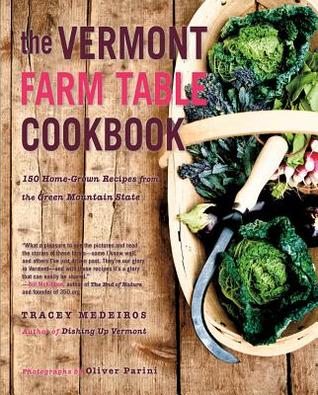
Step 3: Get Hungry. This one is perhaps the easiest step for me! After exploring a little about eating locally and whether or not that is more green, I've found some local cookbooks and farms to learn about seasonal farming and how I can choose to purchase locally or grow my own food at different times of the year.
(Medeiros, 2013)
Step 4: Read More. As a librarian, this step is as familiar to me as getting hungry! I have curated a newsfeed to include information on sustainable cities. I am watching out for words such as rooftop gardening, community gardens, etc. This will help me follow trends through sites like Reddit, Twitter, NPR, and more.
Step 5: Go Abroad. While I do not believe physically traveling will help with this particular goal, I can virtually explore different cities and their infrastructure, as well as different modes of travel to see how cities have approached different challenges with sustainability in mind. I already read about libraries around the world and how they change their physical footprint and believe I can find similar types of stories and articles for the bigger picture.
Step 6: Make Friends. The easiest way to approach this will likely be using forums and sites such as Twitter where I can connect with people globally.
Step 7: Become a Leader. I will start small with this step; I can become a leader in my own community with groups such as 4-H and local co-ops and city meetings. I can become a global citizen in my own backyard and grow as I learn from others around the world.
My Personal Global Citizenship Map
I am starting with Steps 2, 3, and 4! Tomorrow, I will search for The Vermont Farm Table Cookbook: 150 Home Grown Recipes from the Green Mountain State by Tracey Medeiros at my local library to help with Step 3. I am already educating myself by learning about the components of sustainable cities and am compiling some things I want to look into (such as parking lots made of hexagons and grass!) for Step 2. To read more, I will start seeking out topics -- both current news stories, but also examples linked through the UN Goals site and related pages.
References
Cho, R. (2012). How green is local food? State of the Planet. https://news.climate.columbia.edu/2012/09/04/how-green-is-local-food/
Medeiros, T. (2013). The Vermont farm table cookbook: 150 home grown recipes from the Green Mountain State. Countryman Press.
United Nations. Goal 11: Making cities inclusive, safe, resilient and sustainable. Sustainable Development Goals. https://www.un.org/sustainabledevelopment/cities/