Friday, December 17, 2021

EDU 5011 Reflection

Starting From the Bottom

This course covered a variety of topics that I reflect on daily in my own work.  Those topics span from different learning theories to learning accessibility.  Early on, we reviewed Maslow's Hierarchy of Needs.  Remembering these different levels of needs helps with my own interactions at the library helps me empathize and act differently to behaviors from individual children.  For example, rather than immediately effecting consequences on a student after school, I first offer them a water or a granola bar to be sure the most basic of levels of their needs are being met.  Frequently, this corrects the behavior without me having to address it directly.

Maslows-Hierarchy-of-Needs-1 by Nmilligan is licensed under CC BY-SA 4.0

Desire to Learn

Other insights I gained through this course that are influencing my work as a librarian and educator is offering a voice and choice to students.  Rather than deciding for them what we will be doing, I ask what they want to do.  This was inspired by our reading "7 Things That Happen When Students Own Their Reading" and how the desire to learn from the individual children spread to more peers (Spencer, 2017).

Now, if we're learning about origami and structures as part of a STEAM project, I offer them some different origami figures we can learn.  I am also sure to include various styles of learning and activities so everyone has the same learning opportunities.  Using the origami example again, different instructional formats are always available.  We have books, papers for tracing the lines, videos for examples, and then live demonstrations.  As Spencer (2017) points out, this helps them embrace a maker mindset and lets them tie the learning into their own passions, like the guinea pig below based on one of the reluctant learner's own pet!

Origami figure chosen by library patron to learn about how folds are used in engineering to support machines and structures!  They started with this since it was "easy" and then chose to do more difficult shapes after.


Since my professional goals as an educator and librarian are not entirely align with professional goals as teachers, I appreciated that the takeaways in this course could be applied to all activities and not year-long classroom activities.  While I learned a lot from the book reviews my peers presented on, I was happy to have chosen the book I did.  Characteristics of Effective Early Learning opened my eyes to some of the small actions I take in daily interactions and how that can effect early learners before they are even in a traditional and formal learning environment.  For example, it is important for adults to fully commit to pretend-play.  Knowing this and understanding how this helps early learns has helped me work past my own personal insecurities to give play with children 100% of my effort and commitment (Moylett, 2014).  This also ties in with core competencies of social and emotional learning (SEL).  By committing to play, the educators are helping early learners learn empathy, becoming socially aware, and also modelling behavior for relationship skills and decision-making (clubXcite, 2020; Wings for Kids, 2020).

This book also really characterized "will, skill and thrill" for me (Moylett, 2014).  Now, when planning educational events (such as weekly pre-school story times), I am very intentional about choosing books at an appropriate level (skill) and including enticing activities and environmental attributes (will) and always end with hands-on crafts or games to encompass the learning (thrill).

What Now?

Moving forward, I will be pursuing professional development opportunities in the area of engaging story-times and STEAM activities in the library.  I have already started towards this goal with the purchase of several books on immersive experiences in the library and pairing STEAM activities with fictional books.  My hope is to start with the early learners but use the experience on learning on all ages up to teens as I begin applying it!  We already gave glitter jars a try with teens, learning about water viscosity!  It was one of our most-attended teen events since the pandemic started.


References

clubXcite(2020).Social-emotional learning: What is it and why is it important?. https://www.exciteway.com/resource-blog/social-emotional-learning-sel

Moylett, H. (2014). Characteristics of Effective Early Learning : Helping Young Children Become Learners for Life. McGraw-Hill Education.

Spencer, J.(2017) 7 Things that happen when students own their own learning. http://www.spencerauthor.com/7-things-student-ownership/ 

Wings for Kids. (2020) Core competencies. https://www.wingsforkids.org/sel/social-emotional-learning/core-competencies/

Tuesday, December 14, 2021

EDU 5320 Reflection

Points of Learning and Insight

This course explored the integration of technology into the classroom, both physically and digitally.  One of the takeaways that was reminded again and again was that technology should be used to enhance learning, being student-centric, rather than used for technology’s sake.  When looking at the 2020 Annual Technology Survey results for Vermont, this becomes even more clear.  Technology needs to be implemented thoughtfully and with a student-centered purpose since not all students have equal access.

Another important learning point for me was how easy it is to build a learning network as an educator.  RSS Feeds and Digital Bookmarking can be one helpful tool for this, but so can Twitter!  I had started using Twitter in the past year or so to connect with other librarians and this was a wonderful reminder that while Twitter can be a great connection, there are also dangers to be aware of (Lipsett, 2009).

Where this course intersected more fully with my interest in the role of librarians in educating students outside of school was in the exploration of digital citizenship and citizen science.  Digital citizenship in particular is an area where I can offer a lot of passive learning opportunities by posting in our computer areas some tips or rules to avoid cyberbullies and to report it when it is seen.  Similar to camping, the idea is that you should leave the area a better place than you found it – or at least, leave nothing behind.  I also think students need to learn about privacy early since using social media is a way of communicating with their peers now.  Students should be aware of the permanence of their online interactions and the consequences.

"Digital Footprint" by kyteacher is licensed under CC BY-NC-SA 2.0


Going Forward

Going forward, these are facts and opinions that I will be taking with me in my practice.  I need to think about technology purposefully, and it is important that I help students become aware of digital citizenship.  While I touched on some of the most important points above, I had also been keeping a bullet journal with takeaways throughout the semester.  There are three I want to share as they were points that I experienced personally through lesson-planning and screencasts:

  • Not all technology is equal, and paid technological tools are not necessarily better than free ones.  Example: Ginger vs. Grammarly
  • Technology needs to be used with a purpose in class.  As with the smartboard examples, it cannot be used simply for the sake of using technology.
  • Accessibility can be improved with the use of technology.  There are many tools available to help make sure web pages or documents are visually accessible for people who are color blind or have impaired vision; there are grammar tools available for people who have dyslexia or are learning the English language.  Closed captioning can be used with videos and even Zoom calls to help students who are hard of hearing.  There are many wonderful tools available to assist in pursuit of accessibility.

References

Lipsett, A. (2009). Beware the perils of ‘tweaching’. Mortarboard Blog: Teaching. https://www.theguardian.com/education/mortarboard/2009/may/22/twitter-teacher-tweet

Vermont Agency of Education. (2021). 2020 Annual technology survey [PDF]. https://education.vermont.gov/sites/aoe/files/documents/edu-2020-annual-technology-survey-report.pdf

Thursday, August 19, 2021

Global Connections and Growth

 My Global Evolution

Learning about global education was such an inspiring journey for me.  It will help me formalize some of what is already a passion for me, but it also helped me learn about things I hadn’t even considered could be an aspect of librarianship and teaching.  For example, I already work with several DEI initiatives and committees that help bring different perspectives, cultures and backgrounds into different parts of education, but I never considered actually connecting students via Zoom or other means to people around the world.  


In particular, I have begun to consider how the 4 C’s (or 6!) can be incorporated and why that’s important.  There is one institution in particular that I wish I could recreate as a library:


In particular, they have an entire Center for Civic Engagement lounge/classroom in the library.  There are library communities devoted to problem-solving global issues, civic issues, and more.  There are rooms for designing, telepresence rooms, and more.  At the beginning of the video, there’s an image on the large screen in the lobby that shows where people are from.


I think what I found most inspiring about global education is how much room it has for empathy and collaboration.  It’s a creative and worthy effort for our future populations.  I also liked that it isn’t just about people; it’s about the environment and the future and how we can support the world around us, not just ourselves.  

Global Connections


The Global Connections I found most valuable were the ones I made on a local level (to get started).  I found that while through my observations, teachers seemed very communicative through means such as Twitter, I was not having the same luck with librarians, and since I do not use some social media such as Facebook, I am probably missing out in some great online communities.  However, I am hopeful that my local connections will help me start branching out nationally and then globally, building my own little web of global librarians!


One of the books I have been reading on this topic has some tips regarding how I should present myself in order to join or create global networks, which I may need to work on:


  • “Be respectful but do not be shy.

  • Try to establish a cooperative connection and avoid being perceived as patronizing.

  • Leaders of international library development initiatives need to question what they bring to developing countries as outsiders.

  • Collective negotiation of timelines and schedules necessitates a calm approach, sensitivity, and flexibility (Constantinou et al., 2017).”


There were also a lot of resources I learned about this semester, such as the UN’s 17 sustainable global goals.  Knowing about these resources is a great place to get started in building my own toolkit.

My Plan

I am planning to continue learning to be a global educator (and global learner) through library programming and networking.  Through library school, conferences, webinars, and more, I have met and kept contact with librarians around the country (and even one currently practicing librarianship in China).  My hope is that I can leverage these connections to pick their brains for more ideas and collaborations.  Through my readings, I’m learning more about the technical and practical skills I will need to make the most of these connections, outlined in part above.  


In researching how libraries can support global education, one of my big takeaways is that it largely requires cross-institutional work, or “boundary crossing.”  One project in particular that drew on this used students and teachers to help the library form global library exhibits.  According to Hickling-Hudson and Hepple (2020), this is part of a new field called “public pedagogy.”  This is not the only way librarians can become involved, but it is a good place to start to bring multiple institutions together to help the public embrace global themes.


There are several instructors who work with their students on research for topics in different countries.  I will contact them this year to see if we can display the student work outside the library in line with public pedagogy.  Some of the research papers may not draw in attention, but one instructor in particular has a project regarding propaganda in different countries that I think could make an interesting and visually magnetic display.


Less concretely, I am looking into memberships that could assist the library in obtaining global resources.  Back in the 1990s when the internet was becoming the electronic universe it is today, experts were examining how to support the “global village” it was creating.  They found that education and library services might be at the core of this, especially in creating on- and off-ramps for all of the information available (Ballard, 1995).  One of my favorite quotes about this is “A GVS (global village school) is a community of learners, not a place.”  Ballard describes global education as preparing students to see connections between themselves and “their counterparts in other countries” and how that can lead to cooperation in the future.  


Ballard (1995) also suggests that library’s are core to global education as opening electronic doorways to information and providing electronic access to databases and other digital resources.  To that end, resources I already have access to that I will market to faculty through semesterly newsletters include our HeinOnline database which has a library of global constitutions, and Global Issues in Context which explores news and issues (both historical and current) around the world. 


In particular, I am interested in the Centre for Global Education (centered in Northern Ireland) which includes a library of books, research, videos, music, articles, and more.  This organization also has access to classroom support resources.  The current issue is that I believe many of these resources are available in print only so I need to find a corresponding organization with either a larger amount of digital resources or something more local.


References


Ballard, D. W. (1995). The role of libraries in the global village. Library Software Review, 14(3).


Canstantinou, C., Miller, M. J., & Schlesinger, K. (2017). International librarianship: Developing professional, intercultural, and educational leadership. Suny Press.


Hickling-Hudson, A., & Hepple, E. (2020). Crossing the boundaries of imagination: The role of a public library exhibition in global learning for student teachers and teacher educators. Teaching and Teacher Education, 90(102916). https://doi.org/10.1016/j.tate.2019.102916


Sunday, August 8, 2021

School Librarians and Professional Learning Networks

Professional Learning Network and Professional Development Defined

Professional learning networks (PLNs) are venues or tools that allow professionals or "colleagues" -- or in this case, educators and school librarians -- connect virtually with a community in a learning environment (Moreillon, 2015).  Examples of online PLNs include social media groups and tags, online forums through different sites or organizations, and other subscriptions such as Discovery Education.  Some PLNs allow for resources to be shared, while others may be more conversational to learn from each other. Sometimes referred to as Professional learning communities, PLNs have common purposes and a shared vision and encourage continuous growth through professional development (Trinkle, 2009).

Professional development (PD) is defined as learning opportunities for continuous learning or professional growth, frequently through conferences or workshops, or institutional meetings (Trust et al., 2018).  Online professional development is similar except, according to Trust, Carpenter, and Krutka, it can be delivered asynchronously and offers more personalization and engagement.  Examples of this might include webinars, online courses, virtual conferences, and more.  

Advantages of Online Professional Development and Networking

One of the advantages of being globally connected to other school librarians through PLNs is that while on-site workshops, meetings and training opportunities might be focused on teachers and faculty, online connections and opportunities allow school librarians to focus on library-specific needs (Moreillon, 2016).  Some of the benefits that school librarians have reported in one study included "instant family of acceptance and support for librarianship," access to others with more experience, staying current with trends and technology, as well as sharing library lessons and programming (Moreillon, 2015).

Disadvantages of Online Professional Development and Networking

One of the disadvantages of online PLNs for school librarians is that according to a study by Smith (2015), many librarians do not have online PLNs so the audience may be limited.  Furthermore, social media such as Twitter or Facebook are frequently used which may also exclude librarians who do not use social media.

Another disadvantage to online PLNs is getting more than you bargained for.  Jaeger (2010) mentions one situation wherein a teacher-librarian was covering two schools due to budget cuts; when the teacher-librarian reached out for help, it started a lengthy dialogue that started at the very beginning -- if the assignment was even designed correctly -- instead of answering the question.  While this might be helpful long-term and well-intentioned, it was probably not very beneficial to someone who works as a solo librarian for two institutions.

Benefits of Global Connection

Student Benefits

School librarians being connected globally helps students by providing the librarians with tools and knowledge to facilitate learning and resources that students will need to become future-ready (Moreillon, 2015).  Cordell, Rogers and Parker (2012) say that the collaboration allowed by these global connections are "vital to improving student achievement and impacting school learning."  

School Librarian and Teacher Benefits

One of the biggest benefits of being globally connected is that school librarians are frequently solo librarians which may be isolating.  Social media and national organizations are a good start for becoming connected, but there are international organizations that offer more ideas and experiences.  Two of the big ones are the International Federation of Library Associations and Institutions (IFLA), which has members from over 150 countries, and the International Association of School Librarianship (IASL), which is an international network specific for school librarians (Everhart, 2018).

References

Cordell, S., Rogers, R. R. H., & Parker, L. (2012). No more CPR: Resuscitate your professionalism through professional learning networks. Knowledge Quest, 41(2), 18-21.

Everhart, N. (2018). Going global: International professional organizations for school librarians. Knowledge Quest, 46(5), 1-5.

Jaeger, P. (2010). Virtual PLC's @ their best: A daily diatribe. Library Media Connection, 29(2), 14-15. 

Moreillon, J. (2015). #Schoollibrarians tweet for professional development: A netnographic case study of #txlchat. School Libraries Worldwide, 21(2). https://doi.org/10.14265.21.2.010

Moreillon, J. (2016). Building your personal learning network (PLN): 21st-Century school librarians seek self-regulated professional development online. Knowledge Quest, 44(3), 64-69.

Smith, D. (2018). Growing your library career with social media. Libraries and Social Media. Chandos Publishing.

Trinkle, C. (2009). Twitter as a professional learning community. School Library Monthly, XXVI(4), 22-23.

Trust, T., Carpenter, J. P., & Krutka, D. G. (2018). Leading by learning: Exploring the professional learning networks of instructional leaders. Educational Media International, 55(2).

Professional Ethics Reflection

Getting Started

This summer, I signed up for a course (Moral Philosophy & Professional Ethics) through the education program I am in.  At first I thought it would be a simple question of knowing a few different philosophies, and perhaps more importantly, knowing to follow professional ethics while at work.  What I was not expecting was to really dive into the intersection of my own personal ethics and how these intersect with professional ethics -- or how important that would be to me.

My Experience and Thoughts

What I’ve learned in this last semester is that my own personal ethics do not always line up directly with professional codes of ethics from various companies and fields we examined in discussion posts.  For example, I chose to focus my inquiry project on collection development in libraries because I realized that I had a personal, ethical conflict with the ALA Code of Ethics insofar as shelving certain materials went -- in particular the seventh statement requiring fair representation (ALA, 2021) which in itself could create an environment of hate.  Prior to this, I had been uncomfortable with this conflict but had not been able to really put a finger on why.  Further analyzing this issue led me to find that there are many librarians with similar conflicts and there are many great discussions on this topic published in the field.

This realization came from an examination of the Code of Ethics from the perspective of several different ethical and moral philosophies, including deontological ethics, utilitarian ethics, virtue ethics, care ethics, and critical ethics.  Learning about the history and cultural aspects of each of these allowed me to see some issues with the ALA code and also led me to examine how I acted in regards to certain aspects of it.  It helped reading philosophical case studies to understand the framework for examining ethics, such as Christie, Groarke, and Sweet (2007) and their critique and examination of the different philosophical views of supervised injection sites and needle exchange programs.  Understanding how to apply multiple philosophies to a single issue opened my eyes to how something might both be "good" and not good at the same time. 

Critical ethics, in particular, really helped me see how system-based problems were causing moral conundrums in my own personal life.  Beyond my example above regarding the ALA Code of Ethics, I was brought back to when I worked at law firms and how I found sometimes that doing what was legal and playing everything by the book sometimes meant that people were not held accountable (or fully accountable) to their actions and choices.  Further more, the system could be exploited by those who knew how to use it which gave some individuals an unfair advantage.  Perhaps a little harder for me to examine, because I love my work team and have seen an unfortunate divide, was the idea of work systems not always being designed for interprofessional or interdepartmental work as described by Irvine, Kerridge, McPhee, and Freemen (2002).  

The most profound learning experience I had in this course was through the reading of The Path and the completion of the Personal Ethics Story.  As I was reading The Path, I found myself flagging every page it seemed for something else that I thought needed more examining or expressed ideas and practices so well that I needed to come back to them.  This book described a philosophy of small choices we can make each day in order to lead the “good life.”  It’s a book that helps break down becoming virtuous into manageable practices and describes how philosophers intended their philosophies to be acted upon with examples parallel to everyday experiences (Puett & Gross-Loh, 2016).  I expect I will be experiencing changes from this book for a long time.  In the short term, I’ve already been able to reexamine interactions and occurrences at work with more patience, and I’ve been carrying less negative weight from moments during the day.

In Conclusion: An Ethical Leader

All of this has led to me beginning to illustrate, to myself, what an ethical leader is so I can begin to plan for my own professional growth.  To me, an ethical leader is someone who wants to do what’s best for the majority of people (employees and library users, to use a more exact example), but also understands how to value the virtues of individuals and communities in order to provide the best service.  While I think libraries in general are in a constant state of evolution towards democratic and social good, it is important to me that an ethical leader also consider more immediate actions of “good.”

References

American Library Association. (2021, June 29). Professional ethics. https://www.ala.org/tools/ethics 

Christie, T., Groarke, L., Sweet, W. (2007). Virtue ethics as an alternative to deontological and consequential reasoning in the harm reduction debate. International Journal of Drug Policy, 19(2008), 52-58. https://doi.org/10.1016/.drugpo.2007.11.020 

Irvine, R., Kerridge, I., McPhee, J., & Freeman, S. (2002). Interprofessionalism and ethics: Consensus or clash of cultures?. Journal of Interprofessional Care, 16(3). https://doi.org/10.1080/13561820220146649 

Puett, M., & Gross-Loh, C. (2016). The path: What Chinese philosophers can teach us about the good life. Simon & Schuster.

Sunday, August 1, 2021

6 Word Stories & SELs

 This week we learned a lot about incorporating global awareness and global education into STEM courses.  One of our assignments was a presentation to administration, school board, parents, etc. regarding globalizing a classroom.  While I was preparing it, I was thinking about how much prep time that would take for educators individually which made choosing my "Professional Learning NOW" unit through Discovery Education easy.  I chose: Empowering Educators: Teaching Social Emotional Learning in Content Areas.

My three 6 word stories about this unit are from different perspectives across the school.

As a Librarian: Provide social awareness resources for all!

As a Teacher: Identify CASEL competency before planning lesson.

As any Educator: SELs are not separate learning opportunities.

The lesson as a whole was outlined in a way to help a teacher insert one of CASEL's five competencies (self-awareness, self-management, social awareness, relationship skills, and responsible decision-making) into lesson plans.  SELs (social and emotional learning) do not have to be separate from core competencies.  Instead, we can combine them to create fulfilling and enrichening lessons for students.

For each of my 6 word stories, I reviewed the unit again with that perspective in mind.  What I found was that it was, perhaps obviously, more geared towards teachers than for librarians.  However, as a librarian I did also find some helpful information because this is not an area I would have known needed support without reviewing this content.

When thinking about an SOS to help teachers with SELs, I think the "They Said What?" SOS provides an excellent framework.  Students can explore any event -- historical, present, or entirely fictional -- to role-play or create dialogues.  Acting as another not only helps students explore issues such as social awareness, but it also lets them learn about a different time or place and experience it creatively.

One way I would love to incorporate 6 word stories with students in an online class is through one of the English classes I am frequently embedded in.  Students have to choose a human rights issue from somewhere outside of the USA to research for their final paper.  It could help them empathize or become passionate about their chosen subject if before deciding they wrote 6 word stories for three or four different ones and then chose the one that spoke to them the most.  Perhaps that is something I can suggest incorporating this year, with the added bonus that by helping them with this I am helping them become globally aware citizens!

Sunday, July 25, 2021

#DENStar -- Seeking Connections!

This week in class we explored DEN Star and made plans to sign up in the fall.  In the meantime, I'm hoping to connect with some individuals in the #DENStar community.  While I presume a Facebook group would be an easier way to meet a group, I do not use Facebook and do not have a profile.  Luckily, there's more than one way to reach out!  Instead of Facebook, I turned to Twitter and sent out a plea for connections, specifically other library folks.


I'm hopeful that for now I can get some tips for professional development that will help blend my library background with my pursuit of learning in education.  Long term, though, I'd love to be able to invite people from #DENStar to virtually meet with my coworkers and maybe even students to learn about different topics (and share different topics we may have experience on, also).  It would be nice to connect with a librarian specifically, but I will be happy to learn from anyone -- library, teacher, administrator -- we’re all educators!

At this time, I have not planned an event to host for when I do join in September.  If I am able to connect with someone from the community first, I think I will benefit from hearing about their experiences and their favorite professional development conferences or webinars before I make concrete plans.  That being said, I am toying with the idea of hosting an informal “explore DE” type event for my fellow librarians at work.  

While I have not yet heard back from anyone, I expect that will take time since I did not immediately insert myself into the community but rather reached out with a hashtag.  I will be keeping an eye on this tweet, and also the hashtag in Twitter, to see what people are chatting about.  From my exploration this week, it appears to be relatively active and has included screenshots and shared tips from Discovery Education as well as personal thoughts and stories from the DE community.

My fingers will be crossed while I wait and see!

Summing It Up

Using the Spotlight on Strategies "That Sums it Up" from Discovery Education, I am examining three different articles and distilling them from big idea notes to important ideas -- and then, at the end of this post, I am pulling the big ideas from the articles and combining them for a broad picture.  (See the references for the article information!)

What Do "Future Ready" Students Look Like?

"Big Idea" Notes

The Hult Prize is an award given to the winner of the global competition run to find sustainable "social businesses."  The competition focused on in this article was for improving early childhood education in urban areas.  There are several important characteristics that bond together winning teams and ideas: learning quickly about new ideas; using communication to work through differences and leverage different experiences; use setbacks, mistakes, and challenges to refine your process; and share your ideas for feedback and refinement as well as making them available for the largest impact.

Four Important Ideas

  1. Become passionate by learning about new subjects.
  2. Communicate with each other to collaborate.
  3. Try again!
  4. Communicate your ideas to others.

How to Bring Global Learning to Your Classroom

"Big Idea" Notes

Personal experiences can be shared to create empathy with non-personal challenges or problems, such as a Michigan teacher sharing water shortages and management in California with her class.  Ways to help students connect and become a global citizen including using project-based and authentic learning; use tools such as globes, Google Earth, etc. to help students "see" other areas; and connect with a professional network to meet others for ideas and experiences.

Three Important Ideas

  1. Students connect best with authentic experiences.
  2. Tools are available to explore distant places.
  3. Experts and like-minded professionals can help bring global learning to the classroom.

Future Ready Framework Definitions

"Big Idea" Notes

The Future Ready Framework embraces a personal style of teaching and learning to help students learn "deeper" skills such as creativity, innovation, self-direction, and critical thinking.  It creates flexible learning opportunities by using technology -- however, this requires support for network systems, devices, and managing data and privacy.  It also creates personalized learning by bringing students into the community to see how local business and communities connect with the world at large.  This all requires teachers to also embrace continuous learning and for administration and leadership to embrace collaboration in order to plan and transform policies before implementation.

Five Important Ideas

  1. The Future Ready Framework teaches adaptable skills.
  2. Technology is necessary for flexible learning.
  3. Communities can help facilitate global learning.
  4. Teachers need to continuously work on professional growth.
  5. Administration and leadership need to share a culture of innovation to transform.

Final Big Ideas!

1. Communication is key.

Future-ready students need to communicate and collaborate with each other.  Teachers also need to communicate -- not just with their students, but also with professional networks, like-minded individuals, and administration in order to effectively create global experiences for their students with support from administration.  Communication is what lets us share ideas and experiences with people from different places and backgrounds to become global citizens.

2. Technology is an important resource.

Global learning can happen without technology, but technology creates flexible learning experiences and also helps connect people from anywhere to a diverse range of cultures, challenges, and places.  Technology is also an easy way to implement global exploration when travel is prohibitive. 

3. Continuous growth leads to global citizenship.

Failure and setbacks are obstacles but should not stop a global citizenship; this ties back to Final Big Idea 1: communication.  Failure is just a communication that something can be improved.  This means we can go back and find a better way to effect change for a problem or challenge to help others.  Beyond failure, continuous growth means embracing a life of learning.

4. Authentic experiences produce authentic learning.

Hypotheticals may not have the same effect on student learning as authentic experiences.  Examples of this are experiencing a problem themselves, hearing from people who have, or trying to develop actual solutions and experiences instead of hypothetical solutions.  This helps students empathize with people around the world as they learn to think creatively and globally

References

Boss, S. (2015). What do "future ready" students look like?. Edutopia. https://www.edutopia.org/blog/what-do-future-ready-students-look-suzie-boss

Future Schools. (n.d.). Future ready framework definitions [Microsoft Word]. https://futureready.org/wp-content/uploads/2016/07/FutureReadyFrameworkDefinitions.pdf

Tate, S. (2018). How to bring global learning to your classroom. eSchool News. https://www.eschoolnews.com/2018/01/30/global-learning/


Sunday, July 18, 2021

Global Goal to Lead Towards Global Citizenship

The Goal: Sustainability

The goal that inspired me most https://www.globalgoals.org/11-sustainable-cities-and-communitieswas Goal 11: Sustainable Cities and Communities.  There are a few reasons I chose this goal, despite living away from big cities.  Part of it is that the world's population is increasingly becoming larger and I think one of the best ways we can support that population is through creating cities that allow for safe travel and spaces, keep the natural environment as present as possible, and reduce the environmental impact of the population to the highest extent.

This video by GreenTV (2014) really helps drive home how many different areas need to be thought about and incorporated into sustainable cities and communities:


There are several ways, especially in eating locally, that can be helpful to creating sustainable cities.  However, eating locally isn't necessarily "green" unless it's done correctly (Cho, 2012).  The biggest factor, for me right now, at any rate, is safe buildings.  With climate change already upon us, we've been seeing disasters such as the collapsed condo tower in Miami.  Building sustainable cities and communities to me means creating safe places that will keep us safe while minimizing the negative impact we are having on the world.

The Steps: Overview

Step 1: Get Inspired. Look up plans for sustainable buildings and how these can be built in different places.

Step 2: Get Educated. I am currently learning more about sustainable cities and communities by choosing this as my goal and looking at the sub-goals to learn what we can look to improve in this endeavor.

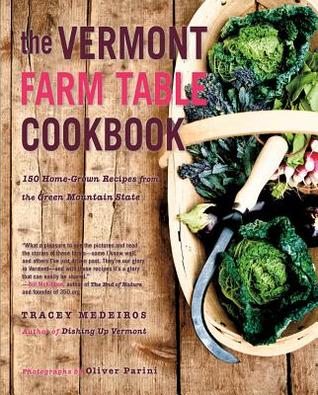
Step 3: Get Hungry.  This one is perhaps the easiest step for me!  After exploring a little about eating locally and whether or not that is more green, I've found some local cookbooks and farms to learn about seasonal farming and how I can choose to purchase locally or grow my own food at different times of the year.

(Medeiros, 2013)

Step 4: Read More.  As a librarian, this step is as familiar to me as getting hungry!  I have curated a newsfeed to include information on sustainable cities.  I am watching out for words such as rooftop gardening, community gardens, etc.  This will help me follow trends through sites like Reddit, Twitter, NPR, and more.

Step 5: Go Abroad. While I do not believe physically traveling will help with this particular goal, I can virtually explore different cities and their infrastructure, as well as different modes of travel to see how cities have approached different challenges with sustainability in mind.  I already read about libraries around the world and how they change their physical footprint and believe I can find similar types of stories and articles for the bigger picture.

Step 6: Make Friends.  The easiest way to approach this will likely be using forums and sites such as Twitter where I can connect with people globally.

Step 7: Become a Leader. I will start small with this step; I can become a leader in my own community with groups such as 4-H and local co-ops and city meetings.  I can become a global citizen in my own backyard and grow as I learn from others around the world.

My Personal Global Citizenship Map

I am starting with Steps 2, 3, and 4!  Tomorrow, I will search for The Vermont Farm Table Cookbook: 150 Home Grown Recipes from the Green Mountain State by Tracey Medeiros at my local library to help with Step 3.  I am already educating myself by learning about the components of sustainable cities and am compiling some things I want to look into (such as parking lots made of hexagons and grass!) for Step 2.  To read more, I will start seeking out topics -- both current news stories, but also examples linked through the UN Goals site and related pages.

References

Cho, R. (2012). How green is local food? State of the Planet. https://news.climate.columbia.edu/2012/09/04/how-green-is-local-food/

GreenTV. (2014). Creating sustainable cities [YouTube]. https://youtu.be/fcDDUSUbq9A 

Medeiros, T. (2013). The Vermont farm table cookbook: 150 home grown recipes from the Green Mountain State. Countryman Press.

United Nations. Goal 11: Making cities inclusive, safe, resilient and sustainable. Sustainable Development Goals. https://www.un.org/sustainabledevelopment/cities/ 

Thursday, May 13, 2021

Using Technology to Teach and Support Student Creativity in the Library

Teachers nowadays face a situation in which students need to be encouraged and taught to develop creative skills, whether these are digital, physical, or less tangible creative pursuits.  There are many programs and apps available for teachers to use to help students develop and explore these skills.  Likewise, there are many theories on the concept of creativity itself.  Vygotsky presented one theory of creative imagination which is summarized by Smolucha and Smolucha (1986) citing four features:

1.      Imagination is the internalization of children’s play.

2.      Imagination is a higher mental function and as such is a consciously directed thought process.

3.      Creative thinking involves the collaboration of imagination and thinking in concepts, which occurs first in adolescence but matures in adulthood.

4.      Both artistic and scientific creativity require the collaboration of imagination and thinking in concepts.

Librarians, especially in schools and academic settings, are in a position where they can support teachers and help students develop creativity in a different setting, especially as it relates to creativity as in Vygotsky’s theory where creative thinking uses both imagination and thinking in concepts.  Fuchs and Medved (2019) address librarians using the ACRL information literacy framework to support creativity and state “the inherent creativity enabled through research and research-based writing becomes inevitable (p. 100).” Creativity here is defined as “the ability to use novel approaches for generating, investigating, and representing ideas (p. 100).”  Not all classes have a class librarian, so in some cases librarians may have limited access to the students and cannot rely on assignments or grades to draw students towards library instruction and space.  Instead, they have embraced technology to help students develop skills to support their creativity and creative thinking.  In many ways, this can be reversed also; they can teach students to embrace their creativity to support their research skills as well.

Librarians may be working with a wide range of students that include multiple grade levels.  Vygotsky outlines the evolution of creativity as children age in his four features, incorporating less play and more directed thought process; there is a similar evolution in the way students interact with new concepts and research.  This can affect the methods librarians will find effective in supporting and motivating creative thinking.  Costello (2015) defines the three levels of K-12 researchers as grazers, loopers, and skimmers.  Elementary school students are more prone to graze information online and can cover large amounts of information without engaging deeply with it.  They may be engaged with reference sources to learn about new topics more broadly.  Middle school students are called loopers for their habit of going back and forth between search results and forming new searches.  This is due to the students modeling research skills they have seen but not having the confidence in their skills yet.   High school students are called skimmers.  It is thought that learning to skim and scan materials in SAT prep classes teaches them this technique.  High school students are more prone to anxiety about the final product of their research.  Some libraries are able to award digital badges to students as they develop different research skills to help build their confidence.  Costello (2015) also proposed fun activities such as online library scavenger hunts to help students learn how to engage with library resources.

While using activities such as online scavenger hunts and helping students earn digital badges to teach them to use library resources efficiently and build confidence in their research skills, librarians can do more to motivate creativity and not just creative thinking.  A common method of doing this is with the use of makerspaces. As Vygostky suggests, this is a way students can use play to direct their thoughts and actions (Smolucha & Smolucha, 1986).  Abram (2015) addresses several types of makerspaces being used in libraries, including FabLabs, Hackerspaces, TechShops and more.  They include space, physically and virtually, for students to explore reading, creative writing, music, coding, programming, and many other creative pursuits.  Makerspaces are not just high-tech set-ups with 3D printers and laser cutters.  Technologies and tools being used by libraries to support makerspaces include discovery tools, repositories, digital commons, and many different apps and types of social media (Shapiro, 2016).  In order to learn to create, students are encouraged and motivated to research the technology, their interests, and the skills and fields they are learning.  According to Abram, “supporting creativity is already part of our [library’s] portfolio (2015, p. 11).”  

Another way librarians are embracing technology to motivate students to develop research skills to support their creativity is through the use of podcasts, blogs, and other broadcasting or showcasing digital tools.  In one example, librarians created podcasts that featured a variety of student work.  Some of these podcasts are student-produced and students share "informing and entertaining culminations of studies," or "provide subscribers with chronicles of ongoing research (Eash, 2006, p. 18).”  Students may read aloud their poems or creative writings; they may also read favorite passages out of books or stories.  Students are encouraged to share the research and creation process to help others realize its messy and nonlinear structure and librarians help supply a digital platform to direct this process.

It is important for librarians to support and teach creativity by connecting with students and teachers using various methods of outreach.  Vygotsky explores how children learn to think creatively and use their imagination through collective social interactions (Smolucha & Smolucha, 1986).  Librarians have to find ways to create these interactions in a welcoming, virtual environment.  Personalizing communications and building connections is important for students to develop their creative thinking skills.  It also builds trust so the library can be viewed as a resource students are comfortable using in their creative pursuits.  Part of this trust and comfort comes from how failure is viewed.  By teaching students to research using the design process, students learn to approach their projects in a non-linear way, combining their imagination with a conscious thought process to come up with creative problem-solving answers.  Librarians themselves should be using a similar non-linear process; as much as students may need to embrace failures as a part of the creative process, librarians have the same need.  One example of this that many librarians may be familiar with at this time is Second Life.  It was thought that Second Life was a digital tool that could be used to connect with distance learners in a personalized environment.  What librarians found instead was that students generally preferred online conferencing tools and could build the same connections with those (Murray, 2015).

Rather than admitting defeat with Second Life, many librarians brainstormed for new ideas to build connections.  Success has been found by some librarians, such as Jameson (2021).  Using the design process to try new methods of connecting with students, gathering feedback and trying again as needed, Jameson found a mix of personal gifs and videos helped students get to know their teacher and librarian, even in virtual learning environments.  Furthermore, the librarians in this scenario used the opportunity to teach students and teachers how to use the tools to create their own reaction gifs for the class.  In a similar scenario, librarians found that supporting teachers led to opportunities to teach students to use digital tools for their creative pursuits.  By working together, librarians taught teachers and students to research and create content for an online school repository; this repository was made with the intent to be used by future students in teachers in their own creative endeavors (Turner & Lucas, 2018). 

While technology can be a great tool to support and teach creativity, there are considerations librarians and teachers should make.  First and foremost is ensuring educational equity; not all students have equal access to technological tools (Evans, 2018).  This can be addressed with school-supplied laptops or tablets.  Evans (2018) found that having access to this technology increased student retention of certain tasks and enhanced their learning experiences through internet research.  Another consideration, especially for librarians, is making sure that if data is collected it is managed ethically.  Sheriff, Benson and Atwood (2019) specifically mention digital learning objects that are created by librarians to teach students asynchronously, such as LibGuides and quizzes, where data may then be stored by the librarians for future use.  They suggest making use of best practices regarding the collection and retention of this data.

 As Vygotsky’s Theory of Creative Imagination outlines, children learn creativity at different stages through a variety of social interactions and directed thought processes (Smolucha & Smolucha, 1986).  Librarians do have a role in supporting and teaching creativity, although they may have to approach it indirectly depending on their access to a class.  By including technology in their toolkit to introduce students to research as a part of creative thinking and creative imagination, librarians can help teach students creativity in many different ways.  While some of the more commonly thought of library tools to support creativity include makerspaces, librarians can also teach teachers and students to use other tools to create online repositories, reaction gifts, and more for their creative pursuits.  The technology used to teach and support creativity does not have to be expensive or take up valuable real estate – some of it is freely available online.  Librarians can also help support creativity by giving students a platform to showcase their creativity and talk about the process or their progress using online podcasts, blogs, or sites.  There are many tools that can be used, and it is not a “one-size-fits-all.”  Each library and student may have different needs.

References

Abram S. (2015). Real makerspaces in school libraries. Internet@Schools, 22(1), 10-11.

Costello, D. (2015). Grazing, looping, and skimming: Understanding students’ digital habits. Internet@Schools, 22(1), 6-9.

Eash, E. K. (2006). Podcasting 101 for K-12 librarians. Computers in Libraries, 26(4).

Evans, J. A. (2018). The educational equity imperative: Leveraging technology to empower learning for all. SpeakUp. https://tomorrow.org/speakup/speakup2017-educational-equity-imperative-september2018.html

Fuchs, C., & Medved, P. (2019). Creative invention: The art of research and writing. In G. Veach (Ed.), Teaching information literacy and writing studies (vol. 2, pp. 93-104). Purdue University.

Jameson, A. (2021). Virtual interactive landscapes: Hold the Bitmoji. Teacher Librarian, 48(3), 40-43.

Murray, J. A., Hale, F., & Dozier, M. (2015). Use and perceptions of Second Life by distance learners: A comparison with other communication media. International Journal of E-Learning & Distance Education, 30(2), 1-22.

Shapiro, S. D. (2016). Engaging a wider community: The academic library as a center for creativity, discovery, and collaboration. New Review of Academic Librarianship, 22(1), 24-42. https://doi.org/10.1080/13614533.2015.1087412

Sheriff, G., Benson, D., & Atwood, G. S. (2019). Practices, policies, and problems in the management of learning data: A survey of libraries’ use of digital learning objects and the data they create. The Journal of Academic Librarianship, 45(2), 102-109. https://doi.org/10.1016/j.acalib.2018.12.005

Smolucha, L., & Smolucha, F. C. (1986). L. S. Vygotsky’s theory of creative imagination.

Turner, H., & Lucas, P. L. (2018). Curating technology for learning: A faculty view. Library Technology Reports, 54(4), 10-18.

Sunday, May 2, 2021

Research Topic: Teaching Research Creatively with Technology

The topic I am pursuing for my research topic is how libraries are (or can be) creatively using technology in library instruction to support or teach students how to research.  

My research so far has covered whether creativity can be taught and learned; how it can be used in active learning; and how to motivate students towards creativity.  With this research, my focus has been mostly tools that can be used, and how learning and implementing creative solutions can benefit students.  Thus far, my research has focused largely on classroom learning and not library learning.  The largest gap I've identified so far in my research is how librarians are using technology to teach creativity in research or information literacy.  I also need to define the relation of the librarian to the student, as demonstrated by the two articles below.  In one, the librarian works directly with the students; in the other, the librarian supports the students by working with faculty.

Brief Annotated Bibliography:

Eash, E. K. (2006). Podcasting 101 for K-12 librarians. Computers in Libraries, 26(4). 

Podcasts can be used to find and learn, but also to disseminate and teach.  Librarians in K-12 schools have found different ways to use technology to create podcasts to these ends.  Some libraries use them to market library services and resources.  Others, though, create podcasts to share student learning and student-designed products.  Some of these podcasts are student-produced and students share "informing and entertaining culminations of studies," or "provide subscribers with chronicles of ongoing research."  These podcasts can include a lot of things, such as student interviews, creative writing, book passages, observations about the learning process, and more.

Turner, H., & Lucas, P. L. (2018). Curating technology for learning: A faculty view. Library Technology Reports, 54(4), 10-18.

Librarians helped to create methods and locate technologies for faculty to use technology to support student creativity and embracing the "messiness" of certain methods.  Some of these technologies included podcasts, blogs, and videos, but it also led to the creation of Design Drive and a repository of faculty and student created content that can be access digitally for future students.

Sunday, April 25, 2021

Learning from FAILURE

If I say that as a student I was terrified of failure, I would not be alone.  I was never taught with productive failure.  It teaches students to embrace failure as a part of problem-solving.  It is defined as "a learning design that affords students opportunities to generate solutions to a novel problem that targets a concept they have not learned yet, followed by consolidation and knowledge assembly where they learn the targeted concept" (Song, 2018). 

In other words, failure can enhance student learning by allowing them to test their own hypotheses and to see how something works and then learning how or why they were wrong and the material they were working towards.  It encompasses active learning and gives students the chance to scaffold their own learning, as well as teaching them how to use design thinking processes later in life.

Even when students are told that failure is okay and leads to growth, it is still a source of anxiety.   Feigenbaum (2021) suggests one way to combat this is with generative failure using these principles:

1) To get something right, first you have to get it wrong (many times for more complicated skills or tasks);

2) Innovation and learning are iterative and messy; and 

3) That messiness needs to be embraced, as well as feedback, to pursue a "productive and happy life." 

I was able to fully embrace this messiness in learning when I became a librarian.  I was encouraged to experiment and test.  We created new websites, and then did user experience and usability testing which led to changes (not failure, but growth!) to make our website work for our users.

My own experiences and this research, especially of productive failure, will be used in the future as I redesign my information literacy lesson plans.  I plan on building in time for students to try their own research before we talk about what they did and how close it is to the tactics I want to try.  We can compare and contrast results -- what part of what they tried first will they continue doing? What parts from the instruction will they incorporate?

  References:

Feigenbaum, P. (2021). Telling students it's O.K. to fail, but showing them it isn't: Dissonant paradigms of failure in higher education. Teaching & Learning Inquiry, 9(1). https://dx.doi.org/10.20343/teachlearninqu.9.1.3

Song, Y. (2018). Improving primary students' collaborative problem solving competency in project-based science learning with productive failure instructional design in a seamless learning environment. Educational Technology Research & Development, (4).